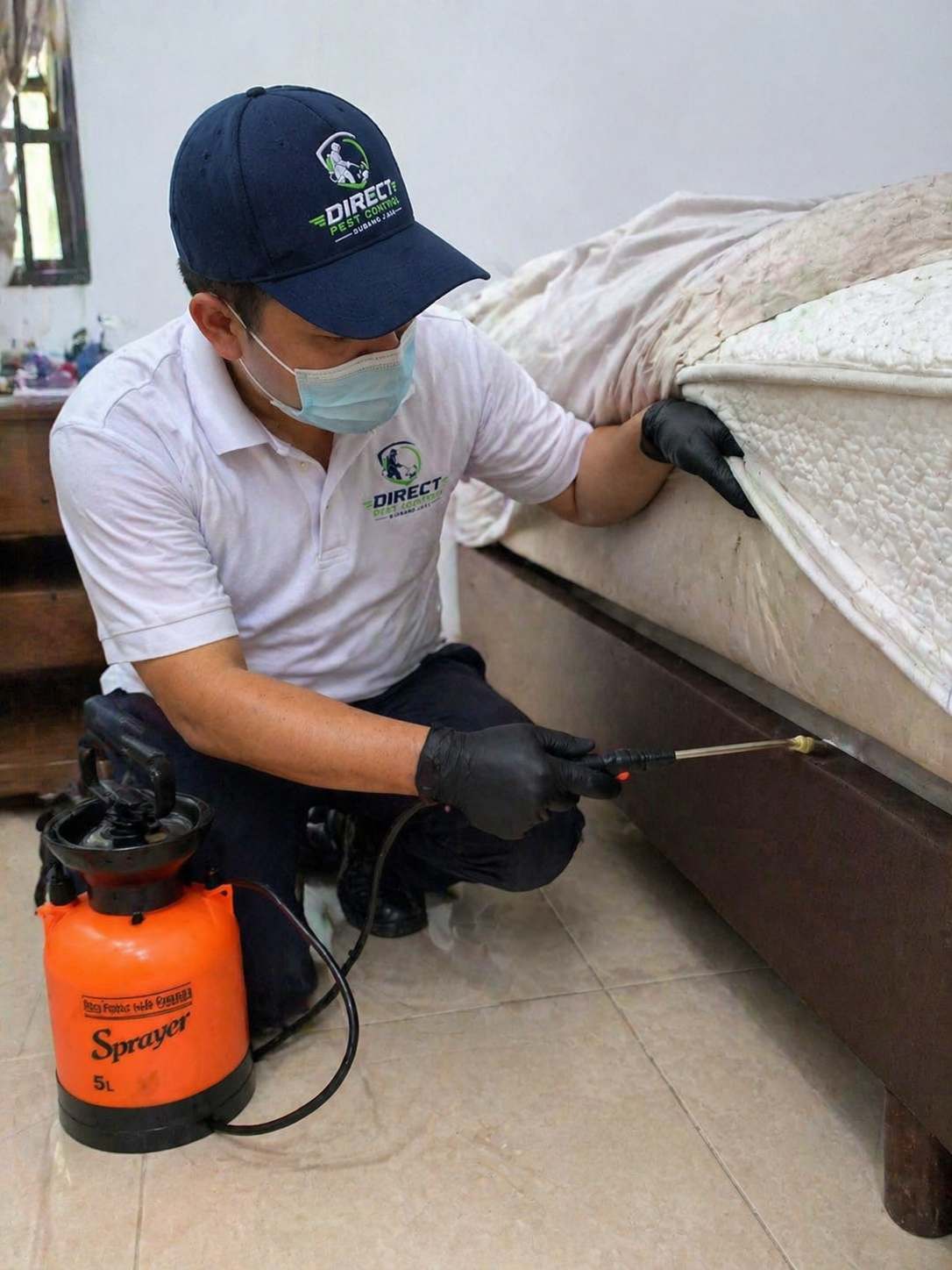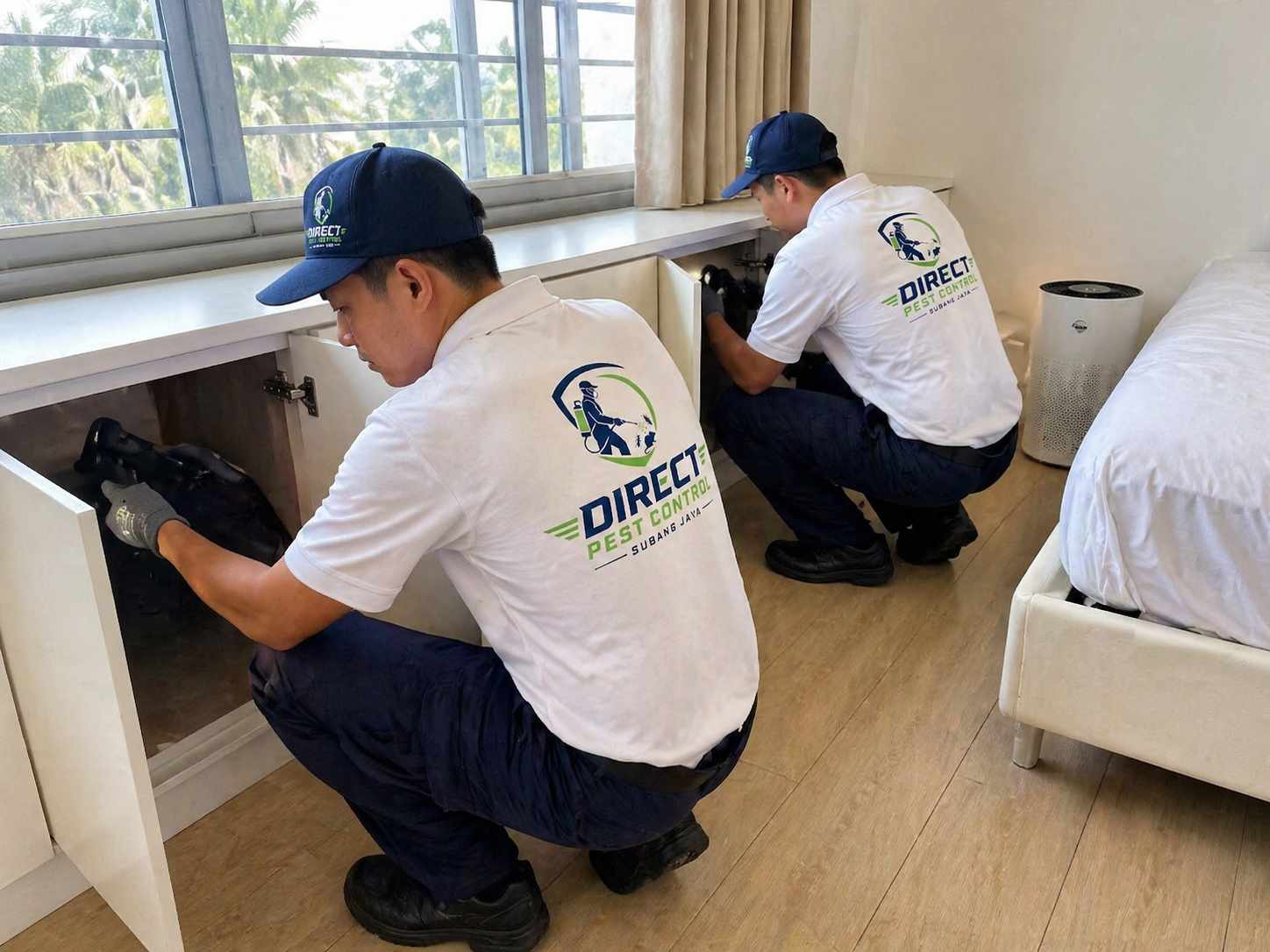

A 14-bed student hostel in USJ had reports of bites from multiple students at end-of-term. With new students arriving in 5 weeks, the operator needed total eradication and documentation. We ran a 30-day programme covering every bed, frame and adjacent furniture.
- Location
- USJ, Subang Jaya
- Property
- Student hostel — 14 single beds across 3 dorm rooms
- Pest
- Bed bugs (Cimex lectularius)
- Scope
- Full mattress / frame / surround treatment + 2 follow-ups
- Duration
- 30 days (intake day 0, follow-up day 14 + day 30)
- Outcome
- All 14 beds cleared. New students arrived to clean rooms.
The situation
The operator of a small private student hostel in USJ received multiple complaints from outgoing students about bites — clusters of 3 bites in a line on arms and ankles, classic bed-bug pattern. Five weeks until the next intake. They needed not just eradication, but documentation they could show incoming parents.
Pre-inspection
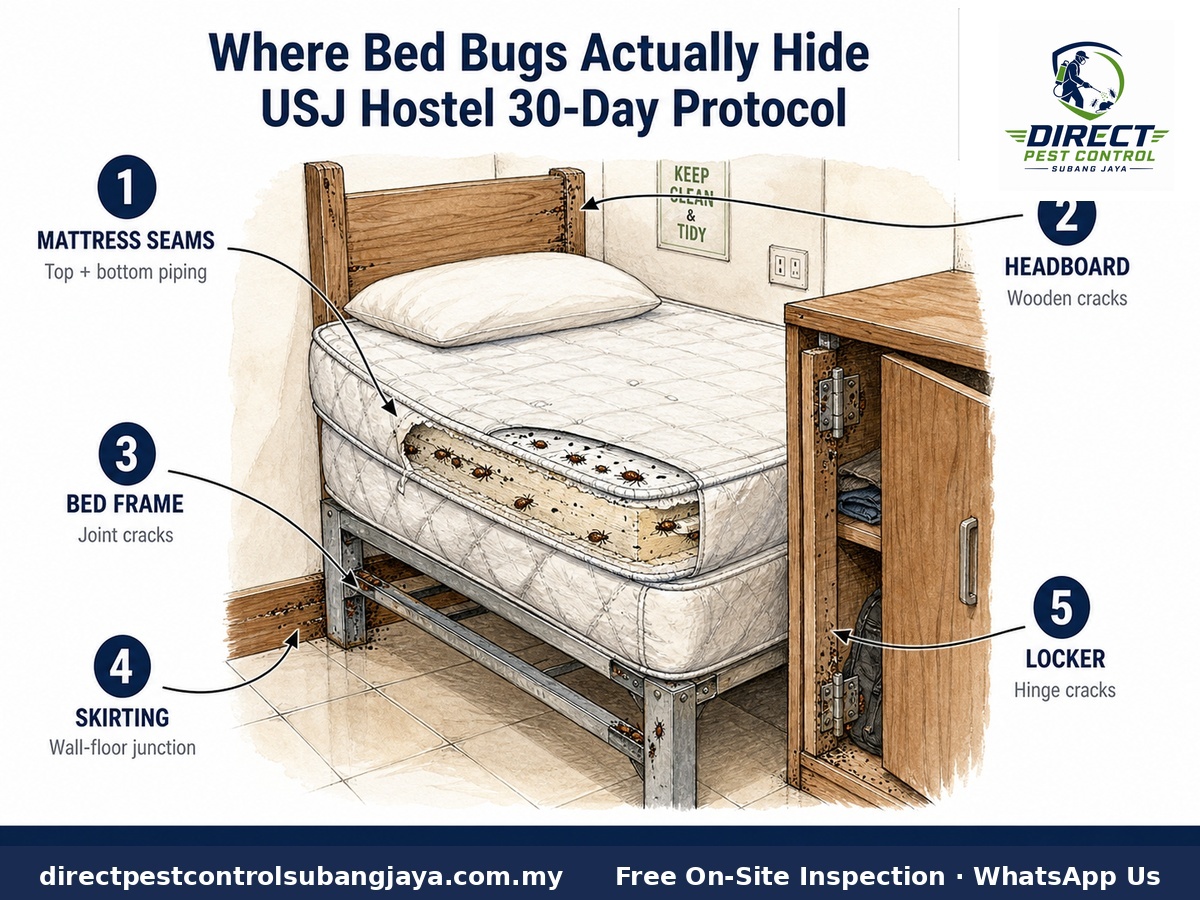
We inspected every bed in all 3 dorm rooms. Confirmed bed bugs visually on 9 of 14 mattress seams (live insects and the characteristic dark fecal dots), plus harbourage on bed frames and inside the wooden lockers adjacent to each bed. The other 5 beds showed no visible activity but — because students share laundry rooms and bugs travel — needed treatment as a precaution.
The protocol
Bed bugs require a multi-visit approach because eggs are protected and resist single-treatment chemistry. Standard bed bug treatment protocol:
- Day 0: Full treatment of every mattress (top and bottom seams), bed frame, headboard, surrounding lockers, skirting boards and adjacent walls. Students' soft furnishings laundered at the on-site laundry on the highest heat setting.
- Day 14: Return visit. Inspect all beds for fresh activity (any new bites or droppings). Re-treat any active sites. This breaks the first hatch cycle.
- Day 30: Final audit. Walk all 14 beds. Document zero activity. Sign-off.
What we asked the operator to do
- Hot-wash all bedding and clothing inside the 30-day window
- Vacuum and dispose of vacuum-bag contents off-site
- Don't bring secondhand mattresses or upholstered furniture into the hostel
- Brief new students on signs to watch for at intake
The outcome
All 14 beds cleared. The 30-day audit found zero live activity and zero fresh fecal dots. The operator received a signed service report covering treatment dates, methods, products used and the audit confirmation — which they could share with incoming parents.
Why hostels and hotels need a different approach
Single-unit residential bed-bug treatment is relatively contained. Multi-bed operations like hostels and hotels have to treat the entire shared space, because bed bugs travel through laundry, between adjacent rooms, and on shared furniture. For commercial accommodation operators we offer discreet scheduling (overnight or between bookings), full documentation, and ongoing inspection contracts where needed.
The team's work — photos from site